Showing posts with label Android Gingerbread. Show all posts

Android

Android is an operating system for mobile devices such as smartphones and tablet computers . It is developed by the Open Handset Alliance led by Google. Google purchased the initial developer of the software, Android Inc., in 2005. The unveiling of the Android distribution on November 5, 2007 was announced with the founding of the Open Handset Alliance, a consortium of 84 hardware, software, and telecommunication companies devoted to advancing open standards for mobile devices. Google released most of the Android code under the Apache License, a free software license.

The Android Open Source Project (AOSP) is tasked with the maintenance and further development of Android.

Android Versions
In its development, Android is always to develop a variety of features into its system and is also developing versions for different Android -- Android, Android Cupcake, Android Donut, Android Eclair, Android Froyo, Android Gingerbread, Android Honeycomb, Android Ice Cream Sandwich. The following versions of Android in general outlined by Digital Electronic Info

Android (v1.1)
    Released on February 9, 2009, the advantage on the Android v1.1 features are:
  • Map: add details and reviews when the user performs a search in Maps in detail.
  • Dialer: the default screen timeout during a call using the speakerphone, can hide and display the dialpad.
  • Message: Saving attachments.
  • System: adding a layout support.

Android Cupcake (v1.5)
    Released on 30 April 2009 to be some features that have been updated, such as:
  • Virtual Keyboard: support for third-party keyboard with predictive-text and dictionary for a word or phrase.
  • Widget: miniature applications that can be installed in other applications and updated periodically.
  • Camera: recording images or video.
  • Gallery: video playback in 3GP and MPEG4
  • Bluetooth: Stereo with A2DP and AVRCP support.
  • Browser: copy and paste features.
  • Contact: adding images to a user favorite.
  • Dialer: displays the specified time for events in call log.
  • System: animated screen transitions.
  • Upload video to YouTube and photos on picasa.

Android Donut (v1.6)
    Released in the last two know, 15 September 2009 andhas been updated with some features
  • Search: voice search and enhanced text search entries to include bookmarks and history, contacts, web, etc..
  • Text to Speech: multi-language feature for all Android apps to speak of a text format.
  • Android Market: allows the search easier on various Android applications.
  • Cameras, camcorders, and galleries: updated and integrated with quick camera access.
  • Gallery: allows the user to select multiple photos for deletion.
  • System: updated with technology support for CDMA / EVDO, 802.1x, VPN and text to speech engine.
  • Display: WVGA screen support for resolution.
  • Google navigation free turn-by-turn.

Android Eclair (v2.x)
    Released on October 26, 2009 with several features
  • Sync: multiple accounts can be added to the device for email and contacts synchronization.
  • Email: Email Exchange support, combined inbox to browse email from multiple accounts in one page.
  • Contact: tap the image and select a contact to call, sms or email.
  • Bluetooth: 2.1 support
  • Message: automatically delete the message when it reaches the set limit.
  • Camera: dukunagn flash, digital zoom, scene modes, white balance, color effects, macro focus.
  • Virtual keyboard: speed in typing.
  • System: hardware with speed Optimized, Revamped UI.
  • Display: support for zise voyage and resolution, better contrast ratio.
  • Maps: Google Maps 3.1.2

Android Eclair v2.0.1 was released on December 3, 2009 and released Android v2.1 Eclair at January 12, 2010 with changes to the API and bug fixes.

Android Froyo (v2.2)
    Released on May 20, 2010 with an updated feature changes
  • System: optimization of performance, memory and speed.
  • Chrome v8 JavaScript integration into the browser application.
  • Improved support for Microsoft Exchange.
  • Increased application shortcuts to the phone and browser.
  • The functionality of the USB and Wi-Fi hotspot.
  • Added option to disable features of data access over the cellular network.
  • Voice calls and share contacts via bluetooth.
  • Support for numeric and alphanumeric passwords and.
  • Support for file uploads role in the browser application.
  • Adobe Flash support.
  • Display: additional support for high DPI screen (320 dpi).

Android Gingerbread (v2.3.x)
    Released on December 6, 2010 with some additions and changes to the features
  • System: updated UI design is simpler and faster.
  • Display: support extra large screen size and resolution.
  • Shorter calls Internet: native support for VoIP phones.
  • Virtual Keyboard: faster, more intuitive text input, improved accuracy, better text.
  • Copy / Paste: increased choice of words in copy.
  • Near Field Communication (NFC) allows users to read tags embedded in posters, advertisements or stickers.
  • The new Download Manager makes it easy to access to the file in.
  • Media: Support for WebM/VP8 video playback and audio encoding ACC.
  • System: an increase in power management with a more active role in managing the application, increased support for native code development, Switched from YAFFS to ext4 on newer devices.
Android v2.3.3 adds several improvements and APIs for Android 2.3 platform.
Android v2.3.4 added support for voice chat or video mengguunakan Google Talk.
Android v2.3.5 was released on July 25, 2011, and improve network performance for 4G Nexus S.
Fixed bud bluetooth on Samsung Galaxy S.
Improved Gmail application.
Android v2.3.6 increase in searching the sound bug fixed.

Android Honeycomb (v3.x)
Android v3.0 on the Motorola Xoom
    Android v3.0.1 was released on February 22, 2011 with changes to the features
  • Optimized with tablet support and new virtual hologram on the user interface.
  • System Bar: quick access to notifications, status, and soft navigation keys.
  • Action Bar: access to contextual options, navigation, widgets, or other.
  • Multitasking.
  • Copy / Paste: simpler, more intuitive.
  • Browser: in automatic.
  • Camera: quick access to Exposure, focus, flash, zoom, timer, etc..
  • Gallery: See albums and other collections in full screen mode easier and Kase.
  • Support for video chat using Google Talk.
  • Hardware Acceleration.
  • Support for multi-core processors.

Honeycomb Android v3.1
    Released on May 10, 2011 with some changes to the features
  • UI improvements.
  • USB connectivity for accessories.
  • Expansion of the latest list of Apps.
  • Wider screen widgets.
  • Support for an external keyboard.
  • Support for joysticks and gamepads.
  • Media: support for FLAC audio playback.
  • High-performance Wi-Fi.
  • Support for HTTP proxy.

Honeycomb Android v3.2
    Released on July 15, 2011 with improved features
  • Improved hardware support.
  • Easy access to the application file on the SD card.
  • Compatibility mode display.
  • Display new support function.

Android Ice Cream Sandwich
Will be released in October-November 2011.
Android Ice Cream Sandwich is combined between Gingerbread and Honeycomb. With such, will likely experience an increase in better features.

Source : Offline TabloidPulsa p.35/ed.201
0 Read More

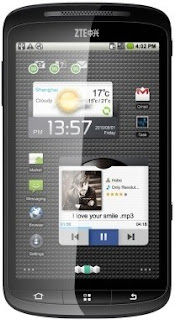
ZTE Skate

ZTE Skate is a slim 11.35 mm thick, has a large 4.3 inch TFT (thin film transistor) capacitive display with a resolution of 480 x 800 and weighs just 148g. Its design style is inspired by the skateboard and it runs on Android 2.3. The Skate provides a user-friendly interface with practical and powerful multimedia capabilities.

With a different ZTE device set to arrive on Cricket soon, the electronics giant also intends to bring this 4.3-inch phone to the US in the near future, though there's nothing concrete on dates and prices just yet.

According to ZTE's executive VP He Shiyou, the company is set to launch "a total of 30 smartphone models" by the end of the year.

ZTE Skate

ZTE Officially Launches Skate 4.3-inch Smartphone Globally

Company will continue rollout of flagship product across the world in 2011

23 September 2011, Shenzhen, China – ZTE Corporation (“ZTE”) (H share stock code: 0763.HK / A share stock code: 000063.SZ), a publicly-listed global provider of telecommunications equipment and network solutions, announced today it has completed the first phase of the global rollout of its new flagship smartphone, the Skate, in Hong Kong. The Hong Kong rollout is the first Skate launch in Asia-Pacific.

The competitively priced Skate is a slim 11.35 mm thick, has a large 4.3 inch TFT (thin film transistor) capacitive display with a resolution of 480 x 800 and weighs just 148g. Its design style is inspired by the skateboard and it runs on Android 2.3. The Skate provides a user-friendly interface with practical and powerful multimedia capabilities.

The Skate was first launched Sept. 12 in Brazil in partnership with Brazilian operator Vivo. It was later launched in Spain on Sept. 16, as part of Madrid Fashion week, in association with local operator Telefonica. The global rollout of the Skate will continue this year in European countries including the U.K. and France, in Asian countries including Malaysia, Indonesia and China, and in the United States

"We at ZTE are extremely enthusiastic about the global launch of the Skate smartphone,” said ZTE Executive Vice President and Head of the Terminal Division He Shiyou. “The Skate is a building block upon the success of our Blade model and is an important step forward for ZTE’s entry into the middle-to-high end smartphone market.”

"We are committed to developing smartphone products and will launch a total of 30 smartphone models before the end of 2011,” he added.

ZTE’s strategic move into the smartphone market in 2011 has played a major part in the company achieving the No. 5 position among the world’s handset manufacturers. Smart terminal products sales in the same period were 400 percent up on the first half of 2011, with U.S. sales up 300 percent.

The ZTE Skate is expected to build on the success of the ZTE Blade smartphone, which has been the company’s flagship product for the last 12 months. Over three million Blade handsets have been sold in more than 50 countries worldwide. The Blade has recently become the biggest-selling Android smartphone in China, averaging more than 17,000 units per day.
0 Read More

Sharp Aquos SH8298U 3D Smartphone goes under the knife, comes out in China

Still like its predecessor with the same features, but there was little change from some of the features that are made by Sharp. Sharp Aquos 3D SH8298U latest products

This time out, the OEM's made some subtle changes to its China entry, reducing the handset's storage from 8GB to 2GB, and packing it with GSM / WCDMA / HSPA radios

The rest of the spec list remains exactly the same, leaving this skinned Android 2.3 phone with a 4.2-inch qHD stereoscopic 3D display, dual 8 megapixel cameras, 512MB RAM and a 1.4GHz Qualcomm MSM8255 Snapdragon processor

Sharp Aquos SH8298U

Source: Sharp
0 Read More

Synrgic Phone T100

Although Synrgic not including phone line with a famous brand of China mobile phone output but is trying to break the power of well-known brands in the market. Synrgic Phone T100

By bringing lunch a few features that are embedded in this phone, very deservedly Synrgic Phone T100can be a second choice you have.

Sporting a 4.3-inch 960 x 540 display, the device runs an undisclosed version of Gingerbread on a dual-core 1.2GHz Tegra 2 processor, packs 1GB RAM, up to 32GB of internal storage (due to an omitted microSD card slot), and 1.3 megapixel front-facing / 5 megapixel rear camera set-up capable of 720p video capture

There's also an HDMI and USB port, ample 1500mAh battery, WiFi, Bluetooth and 3G GSM / WCDMA frequencies on board. If the gossip is to be believed, this phone'll touch down on retailers' shelves sometime in October or November and this blog has article that you read about asus xtion


Synrgic Phone T100

    Features of Synrgic Phone T100
  • High quality, Slim Wild screen Smart Phone (Thicknesswithin 10mm)
  • CPU Tegra250 1G Dual Core CPU
  • OS Android2.3
  • LCM 4.0” or 4.3”(854x480 or 960x540)
  • TP Capacitive TP, Two points capacitive screen Sensor Distance sensor, 3 axis accelerometer, 4 direction
  • iNand 32g Built-in
  • RAM 1G
  • Camera 1.3M front, 5.0M back, autofocus, LED flash, mirror for self-taking
  • Video REC 720P (or above) available
  • Telephone Module
  • Qualcomm chipset, GSM / WCDMA, 6 frequency range
  • GPS Support
  • Bluetooth2.1 support
  • WIFI 802.11 N
  • IO Slot HDMI﹑USB (charge, earphone, data link)
  • SPK Speaker, earphone, microphone
  • Button Power, Sound, Return, Home, Menu
  • Battery More than 1500mAH
  • Weight Within 150g

Source: ChiniTech
0 Read More

Cooming Soon | Monte Carlo from Orange | 4.3 inch Capacitive Touch Screen


monte carlo 
Ratio are that mentions of the Skate caused your brain to instantly tramp to crimper derbies or leatherneck aggregation, but that's understandably not the operation of imagery ZTE is sensing to elicit with its forthcoming smartphone. After all, the Gingerbread maneuver does seem a locomotion up from the accompany's customary offerings, and therefore deserves a far classier argot -- like the Monte Carlo. The rechristened phone gift be inbound agitated, not moved on Orange -- no articulate on an rigorous assort at the moment, honourable "shortly." The Android phone has a 4.3-inch covering, an 800MHz processor, and a fin megapixel camera. From the looks of the Orange page, notwithstanding, the giant Android drain appears absent from the nurture of the maneuver. So often for categorise

Live the high life with the Monte Carlo from Orange. The top of the range 4.3-inch capacitive touch screen will amaze your friends and you can capture some wonderful photos with the 5-megapixel camera. A host of apps are available to enhance your phone via the Android 2.3 Gingerbread operating system and you can stay in touch with everyone via email using the 3G+ data speeds.

Features
  • 5-megapixel camera
  • HD Voice
  • Signal Boost (UMA)
  • Android™ 2.3 Gingerbread
  • 4.3-inch capacitive touch screen
  • WiFi
  • Micro USB v2.0
  • FM radio and MP3 player
  • Video messaging
  • Video recorder
  • Video playback
  • Email
  • Pop3/imap4 email
  • Orange Wednesday apps
  • Orange App Store
  • HSDPA
  • 3G+
  • Music player
  • 3G
  • Camera
  • Touch screen
  • Photo messaging
Dimensions
  • Depth:10.4mm
  • Length:125.9mm
  • Width:67.8mm

Battery life
  • Talk time:5 hours
  • Standby:12 days

Package Selling
  • Charger
  • User guide
  • Battery

Don't miss to read more articles on this blog about sony reader daily edition

source monte carlo

0 Read More

Samsung Google Nexus S GT-19023 | Google Phone


Samsung Nexus S GT-19023

What the first? Previously, Google pointed to the HTC to Nexus manufacture and now Google's trust Samsung to produce Google Nexus S.

The presence of Samsung Google Nexus S is to fix some of the weaknesses that exist in the Nexus.

Why Google has chosen Samsung as to produce Google Nexus S? I don't know, only those who know the reason ...
And in my writing today, I will review the performance of Google's smartphone..

Design, Screen and Variety
Samsung Nexus S GT-19023 has rounded corners so it looks more ergonomic. While on the screen gives the impression of concave contour that adds its uniqueness. For the USB port and 3.5mm audio jackis d bottom.
In the world there are 3 variants Nexus S; Nexus S GT-19020, Nexus S GT-19020A, and Nexus S GT-19023.
Of the three variants, only the Nexus S GT-19020 using Amoled screen and the other using LCD screen.
Although the Nexus S GT-19023 using LCD screen, the quality is also good although not as good as Amoled contrast. The screen of Nexus S is quite responsive in every touch that made.

Camera
Nexus S comes with a camera 5MP with great results and the results of natural color. If when photographing in low light conditions, the user can rely on flash.
However, the most unfortunate of these is the camera of Nexus; no HD features a video recorder, without a touch focus, smile shot, face detection and panorama, without zooming feature.

Operating system
Google Samsung Nexus S GT-19023 has been using Android Gingerbread (v2.3).
Well, one thing to note when using the Google Phone is that we will become one of the first user to know the latest up date from the Android!

Internet and Connectivity
As handphone with OS Android, Samsung Google Nexus S GT-19023 can be relied upon when we surf the Internet. Features such as multi-windows browsing, zooming pich, RSS feeds, and share the page with easy to run on the Nexus S. Moreover, there is connectivity on the smartphone is already integrated with NFC chips (Near Field Communication).

Specs of Samsung Google Nexus S GT-19023 :
Quad Band GSM & HSDPA;
Dimension: 12,39×6,3×1,09cm; 129 gram;
OS Android 2.3 Gingerbread; Prosesor Hummingbird 1GHz, ARM11 Cortex-A8, PowerVR SGX540 GPU; Memory internal 16GB; 512 MB RAM; S-LCD capacitive touchscreen, 480 x 800 pixel, 4 inci, 16M color; oleophobic surface, contour display with curved glass screen, multi-touch input method, accelerometer sensor for UI auto-rotate, touch-sensitive controls, proximity sensor for auto turn-off, three-axis gyro sensor; Camera 5 MP (2560 x 1920 piksel), autofocus, LED flash, geo-tagging, touch focus, Video WVGA@30fps; camera scunder VGA; SMS(threaded view), MMS, Email, Push Mail, IM, RSS;GPRS, EDGE, HSDPA, HSUPA; Browser HTML; poliphoninck (MP3); GPS (A-GPS), Java (via 3rd party apps.), Wi-Fi 802.11 b/g/n; DLNA,WiFi hotspot,  jack audio 3.5 mm, Bluetooth v2.1 (A2DP), Social networking integration, Digital compass,player MP4/DivX/WMV/H.264/H.263, player MP3/WAV/eAAC+/AC3/FLAC player, Organizer, image/video editor, document editor (Word, Excel, PowerPoint, PDF), Google Search, Maps, Gmail, YouTube, Calendar, Google Talk, Picasa integration,Flash Player v10.1, Voice memo/dial/commands, predictive text input,Near Field Communications (NFC); port microUSB v2.0; Battery Li-Ion 1500 mAh
Package: Charger, Data cable, Headset, User Guide book, CD software, Warranty card.
For other articles on this blog, please read about Viliv X70 Windows 7 .... thanks a lot.
3 Read More